
Hyundai Tucson: Braking system / Electronic Stability Control (ESC)
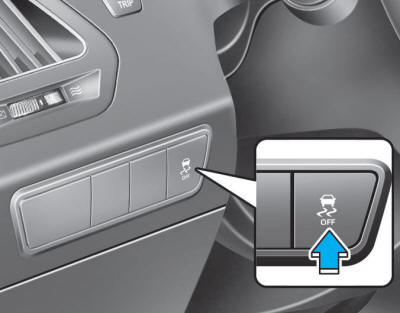
The Electronic Stability Control (ESC) system helps to stabilize the vehicle during cornering maneuvers.
ESC checks where you are steering and where the vehicle is actually going. ESC applies braking pressure to any one of the vehicle’s brakes and intervenes in the engine management system to assist the driver with keeping the vehicle on the intended path. It is not a substitute for safe driving practices. Always adjust your speed and driving to the road conditions.
WARNING
Never drive too fast for the road conditions or too quickly when cornering. The ESC system will not prevent accidents. Excessive speed in turns, abrupt maneuvers, and hydroplaning on wet surfaces can result in severe accidents.
 Using ABS
To obtain the maximum benefit from your ABS in an emergency situation, do not
attempt to modulate your brake pressure and do not try to pump your brakes. Depress
your brake pedal as hard as possib ...
 ESC operation
ESC ON condition
When the ignition switch is in the ON position, the ESC and the ESC OFF indicator
lights illuminate for approximately three seconds and goes off, then the ESC is
turned on.
If t ...
Other information:
Hyundai Tucson (LM) 2010-2015 Service Manual: Description and Operation
Description
Ignition timing is controlled by the electronic control ignition timing system.
The standard reference ignition timing data for the engine
operating conditions are pre-pro grammed in the memory of the ECM
(Engine Control Module).
The engine operating conditions (speed, load, wa ...
Hyundai Tucson (LM) 2010-2015 Service Manual: Description and Operation
Description
The Evaporative Emission Control System prevents fuel vapor
stored in fuel tank from vaporizing into the atmosphere. When the fuel
evaporates in the fuel tank, the vapor passes through vent hoses or
tubes to a canister filled with charcoal.
The canister temporarily holds the v ...
