
Hyundai Tucson: ESC(Electronic stability system) System / ESC Control Unit Repair procedures
| Removal |
| 1. |
Turn the ignition switch OFF. |
| 2. |
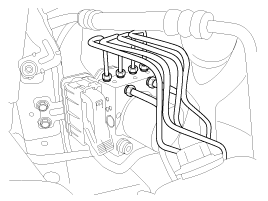
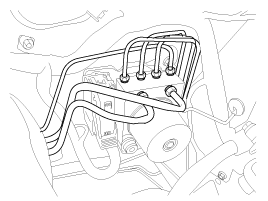
Disconnect the brake tubes from the HECU by unlocking the nuts counterclockwise with a spanner.
[LHD]
[RHD]
|
| 3. |
Pull up the lock of the HECU connector , then disconnect the connector. |
| 4. |
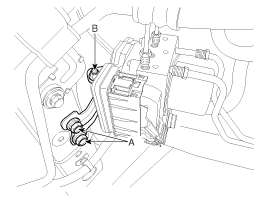
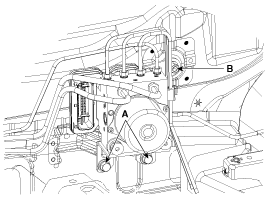
Loosen the HECU bracket bolts (A) and nut (B), then remove HECU and bracket.
[LHD]
[RHD]
|

| 5. |
Remove the 3 bolts, then remove the bracket from HECU.
|
| Installation |
| 1. |
Installation is the reverse of removal. |
| 2. |
Tighten the HECU mounting bolts and nuts to the specified torque. |
| 3. |
After installation, bleed the brake system.
(Refer to ABS bleeding)
|
| 4. |
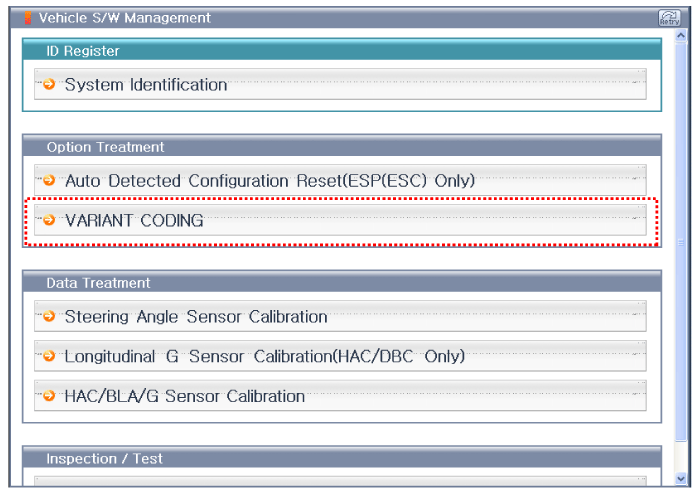
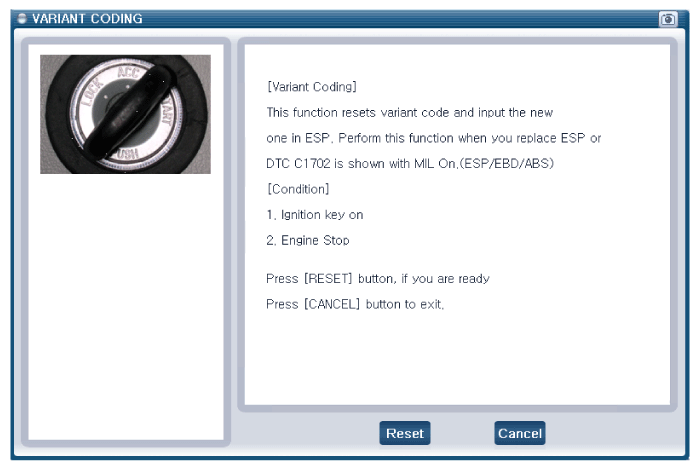
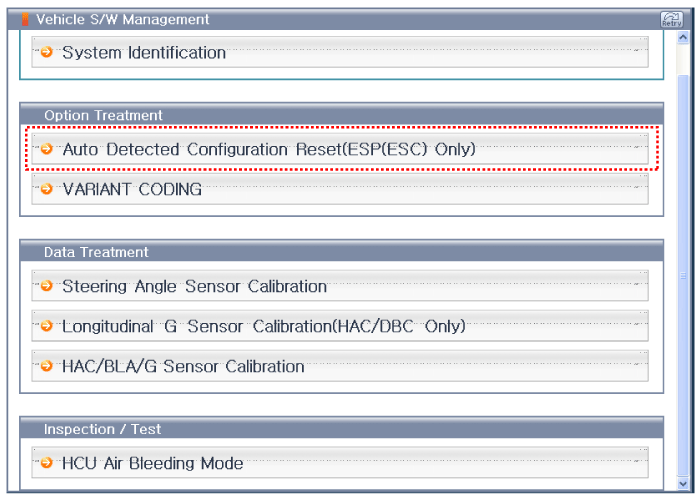
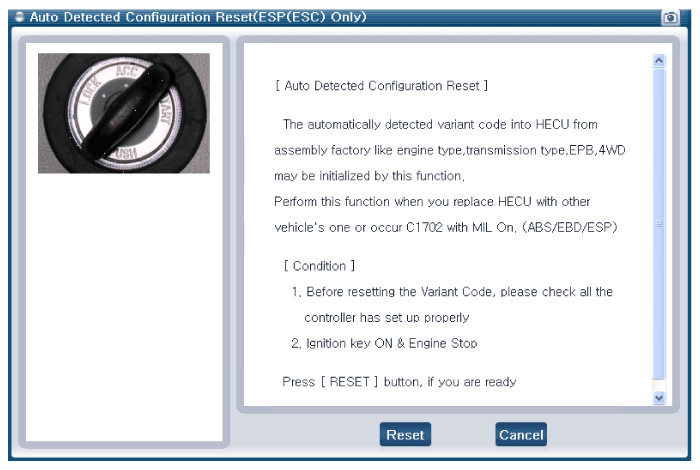
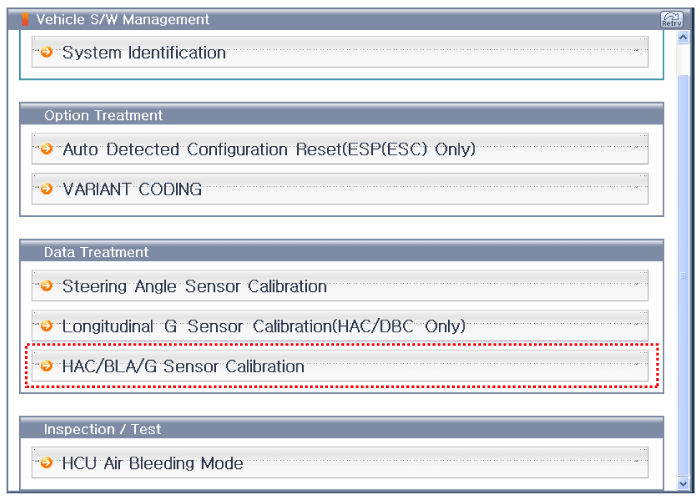
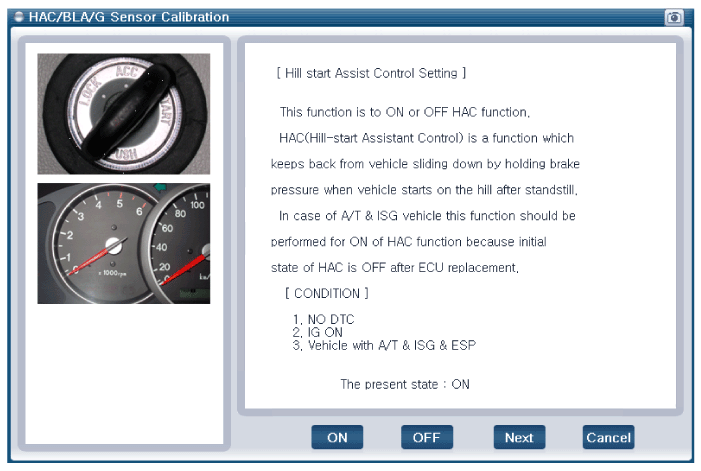
Variant coding.
2WD and 4WD vehicle are sharing the HECU each other. To apply appropriate vehicle, HECU needs to variant coding process.
Variant coding process is necessary when :
Perform the Variant coding.
|
| 5. |
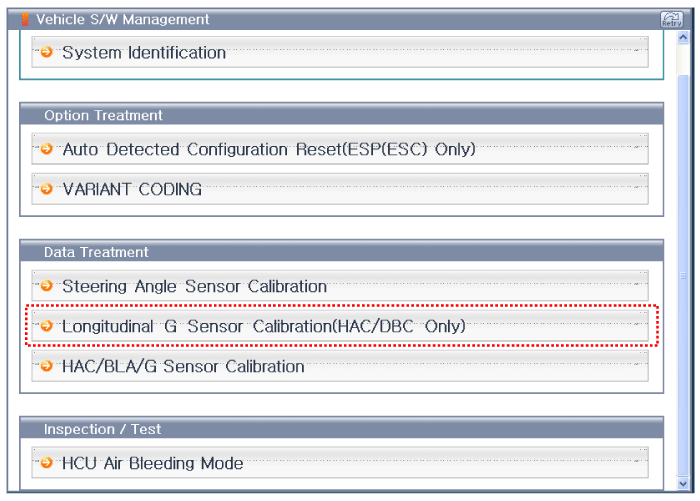
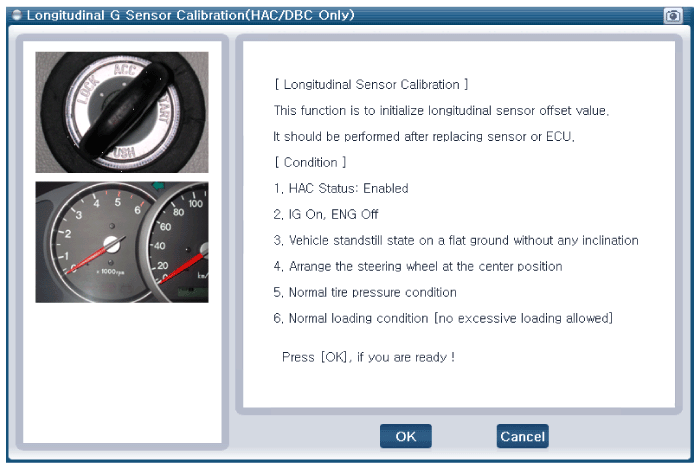
Perform the Longitudinal Sensor Calibration.
(Refer to ESC (Electronic stability system) - "Longitudinal G Sensor") |
 ESC Control Unit Components and Components Location
Components (1)
1. Front - left tube2. Rear - right tube3. Rear - left tube4. Front - right tube5. MC26. MC17. ESC control module connector8. ESC control module(HECU)9. Damper10. Bracket
Componen ...
 Yaw-rate and G Sensor Description and Operation
Description
When the vehicle is turning with respect to a vertical axis
the yaw rate sensor detects the yaw rate electroniclly by the vibration
change of plate fork inside the yaw rate sensor.
...
Other information:
Hyundai Tucson (LM) 2010-2015 Service Manual: Heater & A/C Control Unit(Dual) Components and Components Location
Components
Control Panel
Connector Pin Function
ConnectorPin NOFunctionConnectorPin NOFunctionConnector(A)1BatteryConnector(B)1CAN (LOW)2Tail Lamp (ILL+)2CAN (HIGH)3IG23Intake Actuator (F/B)4DR Temp Actuator (COOL)4Mode Actuator (F/B)5DR Temp Actuator (WARM)5PS Temp Actuator (F/B)6-6DR Temp A ...
Hyundai Tucson (LM) 2010-2015 Service Manual: Alternator Schematic Diagrams
Circuit Diagram
•
COM signal - When
controlling the voltage generated, the ECM sends the target voltage data
to the alternator via a PWM signal.(High voltage: 4V or higher, low
voltage: 2V or lower)
•
FR signal - The
transistor activation signal inside t ...
