
Hyundai Tucson: Tire Pressure Monitoring System / TPMS Receiver Repair procedures
Hyundai Tucson (LM) 2010-2015 Service Manual / Suspension System / Tire Pressure Monitoring System / TPMS Receiver Repair procedures
| Replacement |
When the receiver first arrives for replacement:
|

It is important to make sure that the correct receiver is
used to replace the faulty part i.e. it must be Low Line and not High
Line in order to have the correct inflation warning thresholds set. |

| 1. |
Disconnect vehicle battery. |
| 2. |
Remove the glove box.
(Refer to Body - "Crash Pad") |
| 3. |
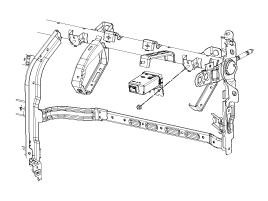
Remove faulty part and fit bracket assembly to new part.
|
| 4. |
Secure new part to vehicle and fit connector. |
| 5. |
Re-connect battery and turn Ignition on. |
| 6. |
Check that TREAD Lamp flash rate matches Virgin State indication. |
| Adjustment |
| Diagnosis procedure by using diagnostic device |
As manual for diagnosis methods by using diagnosis device, the main contents are as follows :
| 1. |
Connect self-diagnosis connector(16pins) located in the lower
of driver side crash pad to self-diagnosis device, and then turn the
self-diagnosis device after key is ON. |
| 2. |
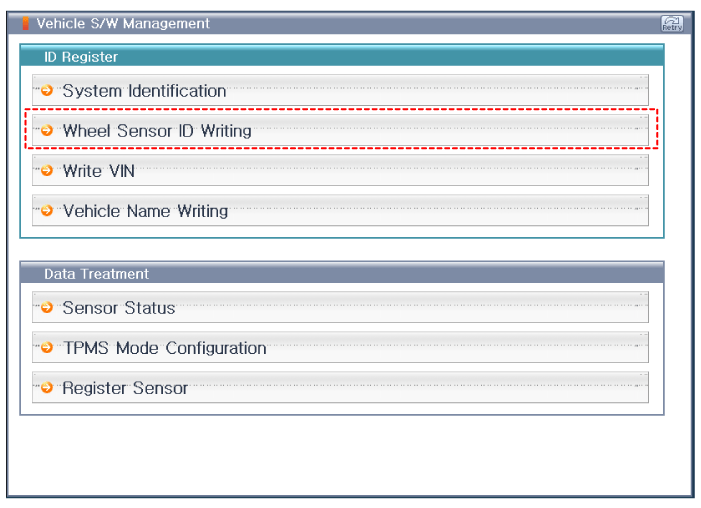
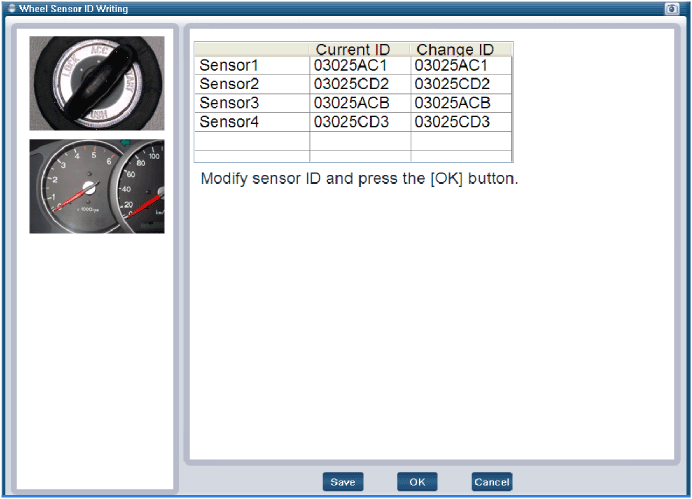
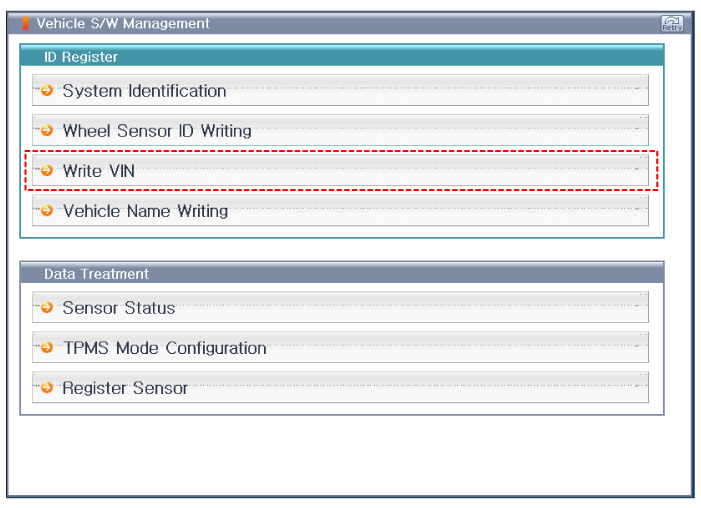
Select the "vehicle model" and "TPMS" on GDS vehicle selection screen, then select OK.
[Sensor ID Writing]
[Vehicle name input initialization]
[VIN input initialization]
|
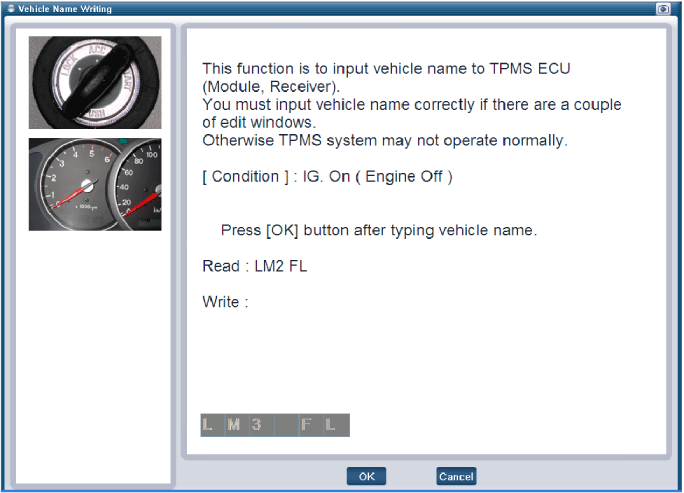
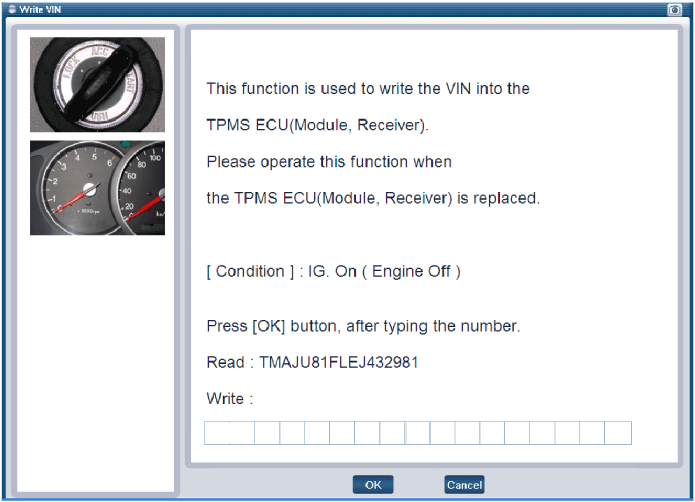
 TPMS Receiver Schematic Diagrams
Schematic diagram
Connector Information
PinDescription1Battery2CAN_High3GND4-5-6-7IGN8CAN_Low9-10-11-12-
...
 Steering System
...
Other information:
Hyundai Tucson (LM) 2010-2015 Owners Manual: Inside light
Tail light and Back-up light
1. Open the tailgate.
2. Remove the service cover using a flat-blade screwdriver.
3. Remove the socket from the assembly by turning the socket counterclockwise
until the tabs on the socket align with the slots on the assembly.
4. Tail light: Remove the bulb fro ...
Hyundai Tucson (LM) 2010-2015 Service Manual: Roof Trim Components and Components Location
Components
1. Roof trim2. Sunvisor3. Retainer
1. Roof trim2. Sunvisor3. Retainer
...
В© 2010-2026 www.htmanual.net
